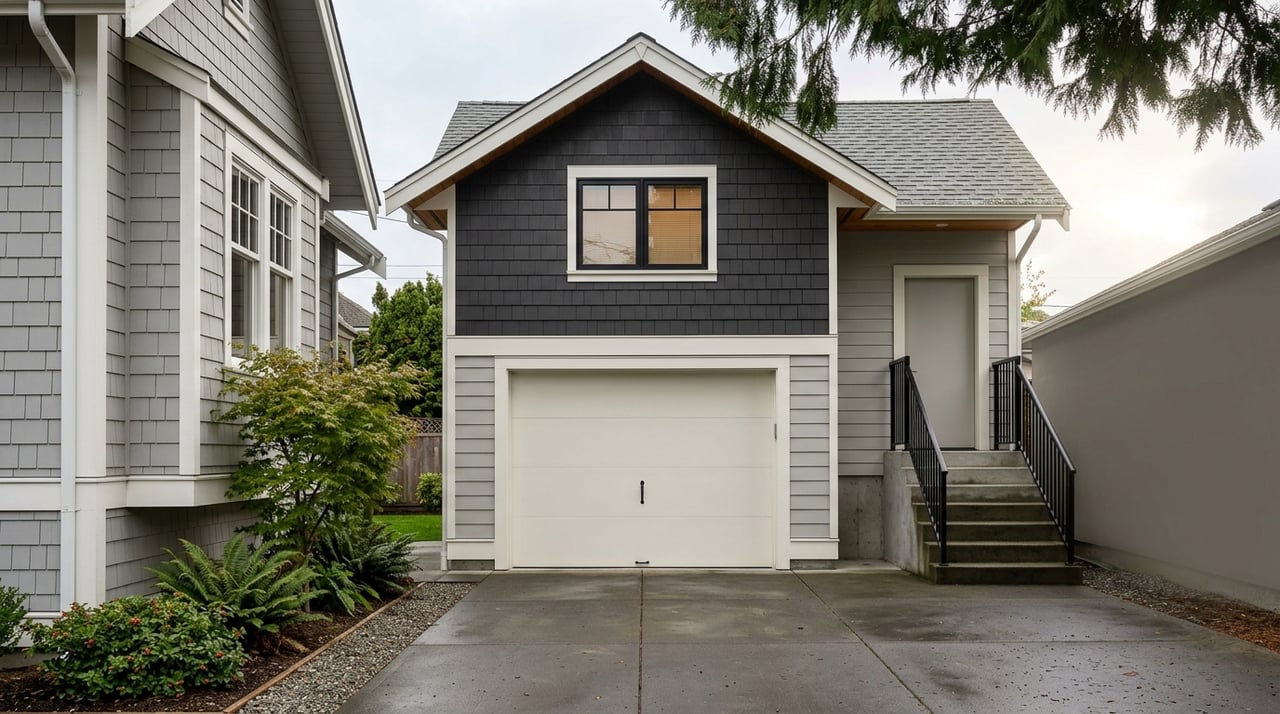
Wondering whether adding an ADU or DADU in Wallingford will actually boost your home’s value or just add cost and complexity? You are not alone. In a neighborhood where the average home value is already high and rental demand is real, an extra unit can create meaningful flexibility, but the payoff depends on your lot, your budget, and your timeline. This guide breaks down what Seattle’s current rules mean for Wallingford owners, what these projects typically cost, and when an ADU or DADU is most likely to make financial sense. Let’s dive in.
Why ADUs Matter in Wallingford
Wallingford is one of Seattle’s higher-value neighborhood markets, which changes the ADU conversation. According to Zillow’s Wallingford home value data, the average home value sits at $1,102,857. That means an added unit may represent a smaller percentage of your overall property value than it would in a lower-priced market.
Rental demand also supports the conversation. RentCafe reports average apartment rent in Wallingford at $2,365, with 57% of households renter-occupied. In practical terms, that points to a neighborhood where a well-designed ADU or DADU may appeal to renters looking for location, privacy, and a smaller footprint.
Seattle ADU Rules to Know
Seattle’s current ADU framework is much more flexible than it was a few years ago. The city says its 2025 ADU update took effect on June 30, 2025, and now allows up to two ADUs per lot, including detached options. The update also increased the floor-area cap to 1,000 square feet and loosened setback and height standards.
Several other changes matter if you own in Wallingford. Seattle says parking is not required, owner occupancy is not required, and ADUs are exempt from street-improvement requirements and MHA contributions. Those shifts can make a project more feasible on paper, especially in neighborhoods with older lots and limited off-street parking.
Parcel Feasibility Still Drives Value
Even with friendlier rules, every property needs a case-by-case review. Seattle requires a building permit for a new DADU or for a remodel that creates an ADU, and projects are reported to King County for sewer-treatment capacity charges. The city also notes that lots under 3,200 square feet in Neighborhood Residential zones can trigger special-exception review.
Site conditions can affect both cost and timing. Seattle’s permit guidance and property research tools note that protected trees and environmentally critical areas may change the process. Before you assume an ADU will raise your value, it helps to confirm what your specific parcel can realistically support.
What an ADU or DADU Costs
Cost is where many Wallingford owners either gain clarity or hit pause. Seattle’s planning appendix cites city ADU owner survey medians of about $100,000 for an attached ADU, $230,000 for a detached ADU, and $200,000 overall for one ADU. Relative to Wallingford’s average home value, that works out to roughly 9.1% for an attached ADU and 20.9% for a detached one.
Those are median figures, not guarantees. Site work, utility upgrades, finish level, and design choices can move the budget meaningfully in either direction. A basement conversion may look very different financially from building a detached backyard cottage from the ground up.
Budgeting should also include permit-related costs. Seattle says permit fees and review charges can include project-value-based fees, technology fees, and additional hourly charges for some drainage or geotechnical reviews. If utility work is triggered, that needs to be part of the upfront math as well.
How Long the Process Takes
Timeline matters if you are thinking about resale, refinancing, or near-term rental income. Seattle says pre-approved DADU plans are usually permitted in 2 to 6 weeks, while a typical DADU permit can take 4 to 8 months. The city’s permit-performance data also shows a 30-day city-control goal for pre-approved DADUs and a 75th-percentile performance of 60 days in city control.
That does not mean the full project is finished in that window, but it does speak to predictability. If your goal is to add value before a future sale, a more predictable permit path may lower your risk. For some owners, that alone makes pre-approved plans worth a closer look.
Rental Income Potential in Wallingford
A big reason ADUs affect value is that they can create income potential. In Wallingford, average rent is already elevated, and current neighborhood rent data shows one-bedroom apartments at $2,359 and two-bedroom units at $3,632. That suggests there is meaningful demand for smaller units in a central location.
Seattle officials have also said ADUs rent for about 25% less than the median one-bedroom apartment citywide, according to a city announcement on ADU production. In practice, that may position ADUs as a more accessible rental option while still offering owners a revenue stream. Exact rent will still depend on size, privacy, finishes, and how the space lives day to day.
How ADUs Can Influence Resale Value
An ADU or DADU can improve resale value, but the effect is rarely automatic. A Harvard Joint Center for Housing Studies review notes that some detached ADUs have increased property value by almost 25%. The same report also points out that more ADU activity improves the appraisal process over time because it creates more local comparables.
That matters in Seattle because ADUs are no longer unusual. The city’s 2024 ADU annual report says more than 900 ADU permits were issued annually from 2022 through 2024. City planning staff also reported that ADU permits outnumber single-family residential permits two to one, which shows a market that is active and increasingly understood by buyers, appraisers, and lenders.
What Buyers May Pay More For
In Wallingford, buyer appeal usually comes down to flexibility. A thoughtfully designed ADU can appeal to buyers who want rental income, space for extended household needs, a work-from-home buffer, or a property with multiple use options. That flexibility can make your home stand out when compared with a similar home that does not offer the same functionality.
Design and fit matter, though. A detached cottage with strong privacy and clean finishes may be perceived very differently than a cramped or awkward conversion. Buyers tend to respond best when the added unit feels intentional, legal, and easy to understand.
When an ADU Makes the Most Sense
The strongest ADU candidates are usually properties that can support the project without major site complications. In Wallingford, that often means a home with alley access, an existing garage, or a basement layout that can be converted efficiently. If the main home already presents well, the added unit may enhance both usability and marketability.
Holding period matters too. If you plan to keep the property long enough to recover construction costs through use or rental income, the numbers may look more attractive. If you are planning to sell soon, visible repairs, curb appeal, or interior updates may deliver a faster return than a brand-new ADU.
When an ADU May Not Be the Best Value Play
Not every Wallingford property should move forward with an ADU. Tight lots, protected trees, environmentally critical areas, and complex utility work can all increase cost and delay. A project that looks promising at first glance can become less compelling once site constraints are clear.
This is where a resale strategy matters. If your main goal is maximizing sale price in the near term, it is smart to compare the ADU option against other improvements that may cost less and photograph better. In some cases, presentation, repairs, and targeted updates create a cleaner path to stronger market performance.
How to Evaluate Your Property
If you are considering an ADU or DADU in Wallingford, start with a practical checklist:
- Confirm your parcel details in Seattle’s property research tools
- Review whether your lot size or zoning triggers extra review
- Identify any protected trees or critical-area issues
- Compare attached versus detached construction cost ranges
- Estimate likely rent based on size, privacy, and finish level
- Consider how long you plan to hold the property
- Weigh ADU construction against other pre-sale improvements
A good decision usually comes from looking at both sides of the equation. You want to know not just whether you can build, but whether building supports your financial goals.
If you are weighing whether an ADU, DADU, or a more traditional update strategy makes the most sense for your Wallingford property, a neighborhood-specific value analysis can help you avoid expensive guesswork. For thoughtful guidance on resale positioning, buyer appeal, and next-step planning, connect with Mark Ashmun.
FAQs
How do Seattle ADU rules affect Wallingford homeowners?
- Seattle now allows up to two ADUs per lot, including detached options, with a 1,000-square-foot cap and no owner-occupancy or parking requirement, but your Wallingford parcel still needs site-specific review.
What does a Wallingford ADU or DADU typically cost?
- Seattle’s cited medians are about $100,000 for an attached ADU, $230,000 for a detached ADU, and $200,000 overall, though site conditions and utility work can change the final number.
How long does a Seattle DADU permit take in Wallingford?
- Seattle says pre-approved DADU plans are often permitted in 2 to 6 weeks, while a typical DADU permit may take 4 to 8 months.
Can a Wallingford ADU increase home value?
- It can, especially when the design is strong and the lot supports the project efficiently, but the value impact is site-dependent and not guaranteed.
Is rental demand strong enough for an ADU in Wallingford?
- Current Wallingford rent data shows average apartment rent at $2,365 and renter-occupied households at 57%, which supports the idea of real demand for smaller rental units.
Should you build an ADU before selling a Wallingford home?
- Sometimes, but not always. If you plan to sell soon, other improvements like repairs, curb appeal, or interior updates may provide a faster and simpler resale return.